



Skin pigmentation or dark patches on the face are often mistaken for melasma. However, not every pigmentation condition is melasma. Visiting a Skin, Hair and Nail Clinic in Sarjapur Road can help identify the actual cause of skin discolouration and ensure the right treatment is chosen.
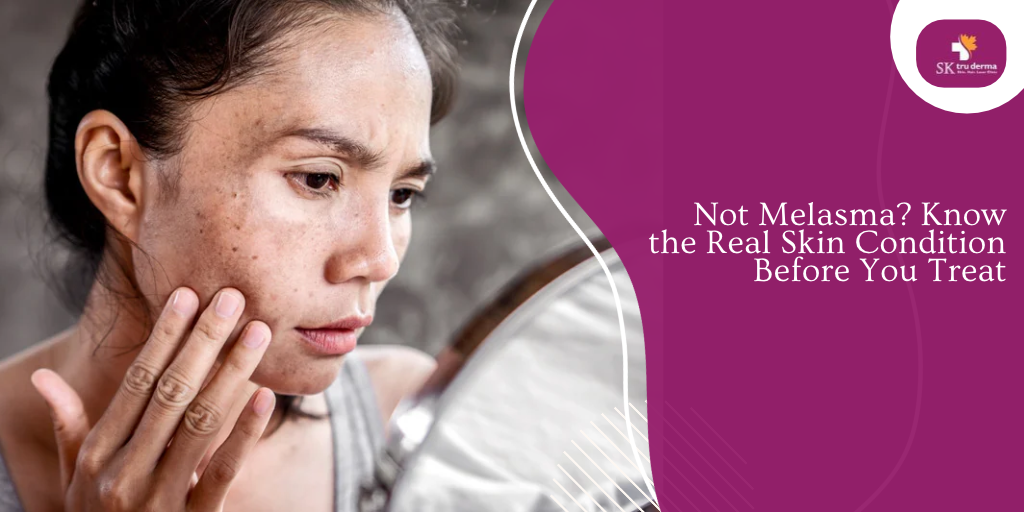
Several skin conditions can look similar to melasma, including:
- Post-Inflammatory Hyperpigmentation: Dark patches that develop after acne, irritation or skin inflammation.
- Freckles: Small brown spots that commonly appear on sun-exposed areas.
- Lentigines: Flat brown spots caused by long-term sun exposure.
- Lichen Planus Pigmentosus: A pigmentation condition that can cause dark patches, particularly on the face and neck.
Treating every dark patch as melasma may not give the expected results. Different pigmentation conditions require different treatment approaches. A dermatologist examines the skin, understands its history and identifies the underlying condition before recommending treatment.
At SK TruDerma, proper skin assessment helps guide personalised treatment plans based on individual skin concerns.
Conclusion
Not every pigmentation concern is melasma. Correct diagnosis is the first step towards choosing appropriate treatment. Consult a dermatologist at SK TruDerma for a professional skin assessment.
FAQ’s
No. Dark patches can result from several pigmentation conditions, including freckles, sunspots and post-inflammatory hyperpigmentation.
It is best to identify the underlying condition first, as treatment varies depending on the type of pigmentation.
Consult a dermatologist if you notice persistent, spreading or changing pigmentation.
Yes. Sun exposure can worsen several pigmentation conditions. Daily sunscreen use is important for skin protection.