
If you’re struggling with stubborn Acne breakouts and searching for a Dermatologist Near Gunjur Road, understanding whether you have fungal acne or bacterial acne is the first step toward clear skin. Many people treat acne incorrectly because they don’t know the root cause—leading to worsening symptoms instead of improvement.
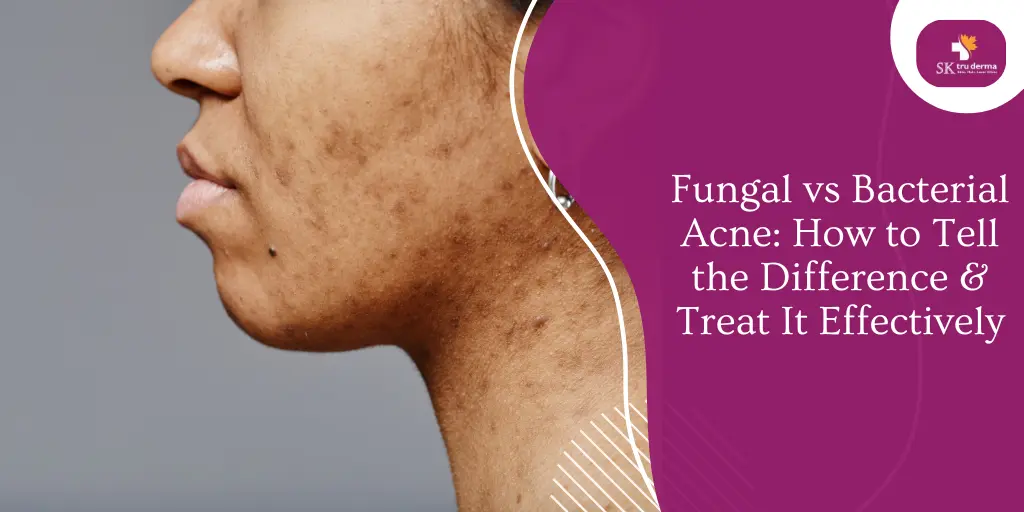
What is Bacterial Acne?
Bacterial acne is the most common type of acne, caused by Cutibacterium acnes bacteria.
Key Characteristics:
- Whiteheads and blackheads
- Painful red pimples
- Cysts and nodules (severe cases)
- Appears on face, chest, back
Causes:
- Excess oil production
- Hormonal imbalance
- Clogged pores
- Poor skincare habits
What is Fungal Acne?
Fungal acne (technically called Malassezia folliculitis) is caused by yeast overgrowth, not bacteria.
Key Characteristics:
- Small, uniform bumps
- Itchy acne (major sign!)
- Appears in clusters
- Common on forehead, chest, and back
Causes:
- Excess sweating
- Humid weather
- Antibiotic overuse
- Oily skincare products
Fungal vs Bacterial Acne: Key Differences
| Feature | Bacterial Acne | Fungal Acne |
| Cause | Bacteria | Yeast (fungus) |
| Itching | Rare | Common |
| Appearance | Varied (whiteheads, cysts) | Uniform small bumps |
| Treatment | Antibiotics, retinoids | Antifungal medications |
| Triggers | Hormones, oil | Sweat, humidity |
Why Misdiagnosis Happens
Many people assume all acne is bacterial and start using:
- Harsh acne treatments
- Antibiotics
???? This can worsen fungal acne, since antibiotics kill good bacteria and allow yeast to grow more.
Treatment Guide
For Bacterial Acne:
- Salicylic acid
- Benzoyl peroxide
- Retinoids
- Oral antibiotics (in severe cases)
For Fungal Acne:
- Antifungal creams (ketoconazole, clotrimazole)
- Antifungal shampoos (used as face/body wash)
- Avoid oily and heavy skincare products
Skincare Tips That Work for Both
- Use gentle, non-comedogenic products
- Avoid heavy oils and pore-clogging ingredients
- Shower after sweating
- Keep skin barrier healthy
When to See a Dermatologist
If your acne:
- Doesn’t respond to treatment
- Is itchy or spreading
- Keeps coming back
???? It’s best to consult a qualified dermatologist for accurate diagnosis and targeted treatment.
FAQs
1. How do I know if my acne is fungal or bacterial?
Fungal acne is usually itchy and appears as uniform bumps, while bacterial acne includes whiteheads, blackheads, and painful pimples.
2. Can fungal acne go away on its own?
In mild cases, it may improve with proper hygiene, but most cases require antifungal treatment.
3. Does salicylic acid work for fungal acne?
No, salicylic acid works for bacterial acne. Fungal acne requires antifungal treatments instead.
4. Can I have both fungal and bacterial acne at the same time?
Yes, it’s possible to have both conditions simultaneously, which makes diagnosis and treatment more complex.
5. What ingredients should I avoid for fungal acne?
Avoid:
- Coconut oil
- Fatty acids
- Heavy creams and oily products
6. Is fungal acne caused by poor hygiene?
No, it’s caused by yeast overgrowth, often triggered by sweat, humidity, or antibiotics—not dirt.
7. What is the fastest way to treat fungal acne?
Using antifungal creams or medicated shampoos (like ketoconazole) can show improvement within 1–2 weeks.
8. When should I visit a dermatologist for acne?
If your acne is persistent, worsening, or not responding to over-the-counter treatments, consult a specialist for proper diagnosis.
Conclusion
Understanding the difference between fungal acne and bacterial acne is essential for choosing the right treatment and avoiding unnecessary skin damage. While they may look similar at first, their causes, symptoms, and treatments are completely different—meaning a one-size-fits-all approach simply won’t work. Misusing acne products, especially antibiotics, can sometimes worsen the condition if it’s actually fungal acne.
The key is to observe your skin carefully—look for signs like itching, uniform bumps, or resistance to typical acne treatments. When in doubt, getting a professional diagnosis ensures faster and more effective results. With the right approach, consistent skincare, and targeted treatment, both fungal and bacterial acne can be managed successfully for clearer, healthier skin.